
As an Amazon Associate, PaxmaHub earns from qualifying purchases. Affiliate products here are Amazon’s — shipping and returns are Amazon’s, not PaxmaHub’s.
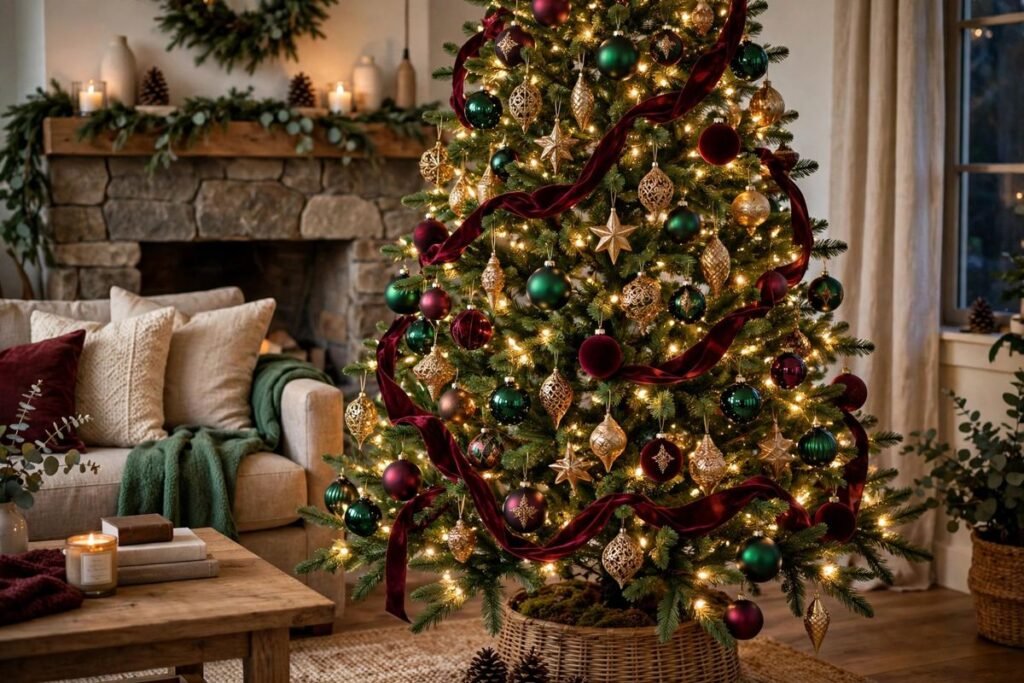
A jewel-tone Christmas tree uses two or three deep colours — emerald and burgundy work best — plus one metallic, usually antique or champagne gold. Use velvet ribbon, warm white lights, and repeat the same colours in the garland and wreath so the tree looks intentional, not random.
Most jewel-tone trees fail for one reason: too many colours. Emerald, burgundy, plum, navy and sapphire all go on the same tree, nothing repeats, and the room ends up looking dark and busy instead of rich. The fix is not buying more ornaments. It is choosing fewer colours and repeating them on purpose.

Illustrations: AI-generated images are used in this guide.
Last updated: 2 November 2026
In this guide — 9 sections
Pick the palette (choose 2-3, not 5)
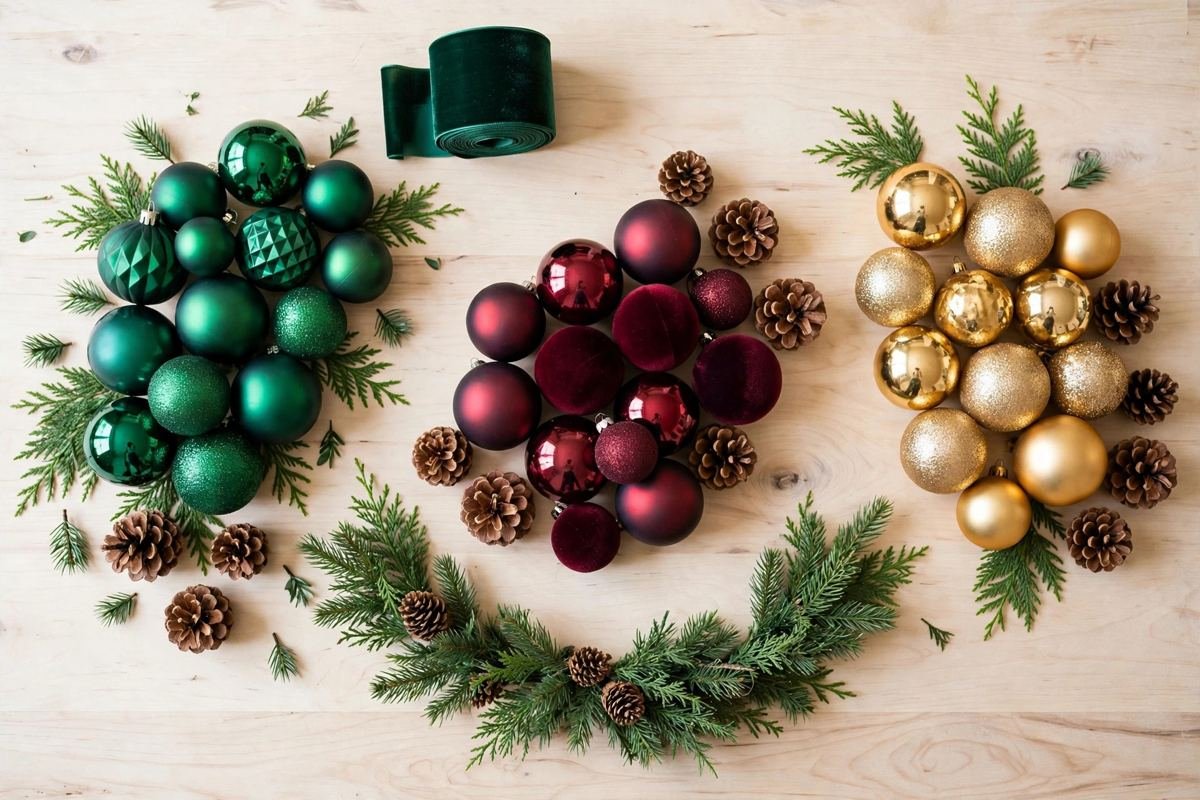
Lead combo for this guide: emerald + burgundy + antique gold. Emerald gives the green depth, burgundy gives the warmth, gold gives the light.
For the burgundy side of the palette, see our guide to burgundy velvet christmas ornaments.
Two other proven combos (use only one per tree): sapphire + champagne + pearl; plum + forest green + rose gold.
Rule: 2-3 jewel tones + 1 metallic, nothing else. If a fourth colour creeps in, take it off the tree and put it in another room.
Repeat test: each colour should appear at least three times in every vertical section of the tree, or it looks like a mistake.
Order of decorating (this order prevents the busy look)
1. Lights first: warm white, not cool white — cool white fights deep colours and makes them look harsh.
2. Ribbon second: velvet ribbon, loosely draped, not wrapped tight. Ribbon is the cheapest way to carry the palette from tree to wreath to garland.
3. Large ornaments third: place larger pieces deeper inside the branches, near the trunk, for depth. Small ornaments go on the outer tips.
4. Fillers last: pinecones, berry picks and small metallic accents to fill gaps — not another colour.

Illustrations: AI-generated images are used in this guide.
Jewel Tone Christmas Lights
Lights are where jewel tones are won or lost. The rule from the palette applies here too: one light colour, chosen on purpose. For most jewel-tone trees that colour is warm white — it sits behind emerald and burgundy like candlelight, while cool white fights both colours and makes burgundy look purple and emerald look blue.
Want the lights themselves to carry the jewel look? Use them as the accent, not the base: a mostly warm-white tree with one strand of deep emerald or burgundy bulbs worked through the inner branches reads rich, not novelty. Keep the metallic in the ornaments — gold-toned lights plus gold ornaments is how a jewel tree tips into looking brassy.
Whatever you choose, test one branch after dark before you commit. Jewel tones are judged at night, under your lights, not in the shop.
Comparison: three jewel-tone palettes
| Palette | Best for | Metallic to pair | Watch out for |
|---|---|---|---|
| Emerald + burgundy + antique gold | Traditional rooms, dark wood | Antique gold | Too much burgundy without gold looks heavy — add cream ornaments to lift it |
| Sapphire + champagne + pearl | Modern / bright rooms | Champagne gold | Sapphire alone can look cold — warm white lights are essential |
| Plum + forest green + rose gold | Soft, romantic rooms | Rose gold | Plum + green without a metallic looks flat |
Illustrations: AI-generated images are used in this guide.
Make it match the room
A tree does not live alone. Repeat emerald and burgundy in one garland, one wreath, or two cushions — not everywhere, just enough that the tree and the room feel like one plan. This is the step most guides skip, and it is the step that makes a jewel-tone tree look designed instead of decorated.
See also: Winter Wreaths & Garlands on PaxmaHub — artificial, unlit wreaths and garlands in the same palette family.
Jewel Tone Christmas Decorations: Room-by-Room Ideas
The tree is the centre of a jewel-tone scheme, not the whole of it. These are the decorations that carry the same two or three colours through the house — each room gets the palette once or twice, never a full second scheme.
Living room: repeat the palette in soft pieces
Two cushion covers in burgundy or emerald velvet, one throw in the second colour, and the tree does the rest. Soft furnishings are the cheapest jewel tone Christmas decorations there are, because velvet already has the depth the look needs — no new ornaments required. Finish the tree itself with a burgundy velvet tree skirt so the base matches the palette instead of showing the stand.
Mantel and garland: one strand, same colours
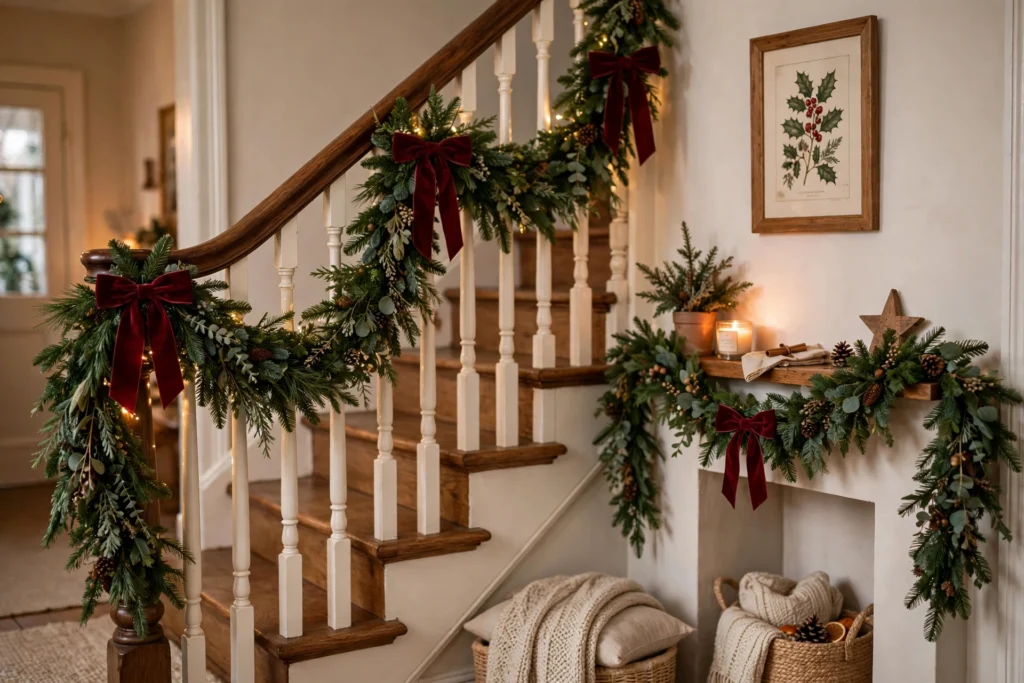
Run one unlit garland (the greenery picks in Shop This Look below) and dress it with three things only: a few of the tree’s ornaments, one velvet ribbon, and warm-white lights. Velvet ribbon is also where the bow trend joins this look — our guide to velvet bows for the Christmas tree covers the sizes that work on a garland as well as a tree.
Dining room and entryway: small, repeated, deliberate
A jewel-tone table runner or two candlesticks in antique gold in the dining room; a single wreath carrying the tree’s ribbon on the front door. Large jewel tone Christmas decorations are not the point — one strong piece per space beats five small ones. And if purple is your third colour rather than emerald, our purple Christmas tree guide shows how the same rules bend toward plum and violet.
DIY jewel tone decorations when the shops fail you
The honest gap in this niche: shops sell emerald and burgundy separately, rarely as a set. The DIY fix is a can of deep-green or burgundy spray paint on plain baubles you already own, plus velvet ribbon from a fabric shop cut for bows. Ten minutes per ornament, and the colours match your palette exactly — which no bought set guarantees.
What NOT to buy for this look
Do not buy a fifth colour “just to try it” — it breaks the palette. Do not buy glass ornaments for a house with kids or pets — use shatterproof finishes in the same colours instead (same look, no breakage). Do not buy a pre-lit tree or garland for this look if you want to control the light colour — unlit greenery lets you choose warm white lights yourself.
Carry the emerald and burgundy palette from the tree to the rest of the room with these winter greenery pieces — a wreath for the door and unlit garlands for the mantel and stairs, in the same winter palette family as this guide.
Shop This Look
As an Amazon Associate, PaxmaHub earns from qualifying purchases. Prices are shown on Amazon — check the live price there before you buy. Shipping and returns are Amazon’s, not PaxmaHub’s.

1. Best Door Wreath — YNYLCHMX 20″ Winter Wreath
A 20-inch winter wreath of faux pine needles, pine cones and berries, finished with a small welcome sign. It carries the tree’s greenery to the front door or a window without adding another colour.
The berries are the only accent, so it sits comfortably beside an emerald-and-burgundy tree. For more jewel tone, tie a burgundy velvet bow at the top.
✓ Pros
- Door-friendly 20″ size
- Pine cones and berries suit a natural-greenery palette
- Also works on a window, wall or fireplace
✗ Cons
- The welcome sign suits a door more than an indoor wall
- Reads light on a wide or double door
2. Best Matching Set — Arborus Winter Set (24″ Wreath + 6-ft Garland + 30″ Swag)
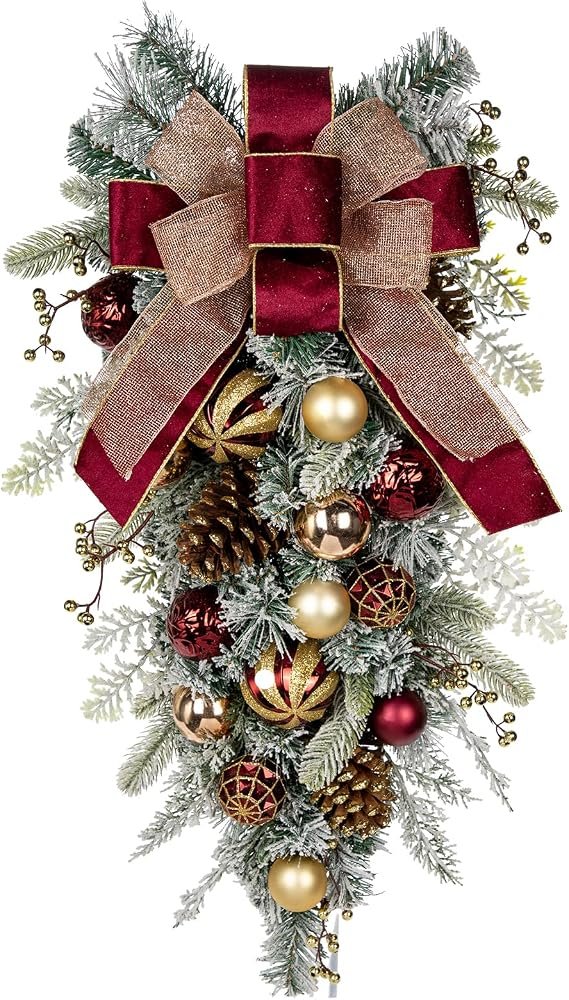
Three pieces in one box: a 24-inch frosted pine wreath, a 6-foot unlit garland and a 30-inch teardrop swag, all trimmed with berry clusters, pine cones and ribbon.
This is the set for the “repeat the palette” rule. One finish covers the door, the mantel and the stair rail, so the room looks planned rather than collected.
✓ Pros
- Wreath, garland and swag match each other
- Unlit, so you add your own warm white lights
- Door, mantel and staircase in one order
✗ Cons
- The frosted finish is a style choice, not right for every jewel-tone scheme
- 6 ft of garland covers one mantel, not a full staircase

3. Best for Staircases — homchy 18FT Real Touch Norfolk Pine Garland (2 x 9FT)
Two 9-foot lengths of real-touch Norfolk pine, 18 feet in total, with no lights built in.
Plain greenery is the right base for a jewel-tone scheme. Wrap it in emerald or burgundy velvet ribbon, add a few gold picks, and it matches the tree without a second set of colours.
✓ Pros
- 18 ft total, enough for a staircase or a long mantel
- Real-touch Norfolk needles look softer than tinsel garland
- Unlit, so you choose the light colour
✗ Cons
- Needs fluffing, plus your own ribbon and accents
- Two separate pieces to join on long runs

4. Best 2-Pack for Smaller Spaces — ENVEN Faux Norfolk Pine Garland (6FT, 2-Pack)
Two 6-foot real-touch Norfolk pine garlands, unlit, listed for indoor and outdoor use.
Two shorter pieces are easier to place than one long run: one on the mantel, one on a console or doorway, both dressed in the same two jewel tones.
✓ Pros
- Two 6-ft pieces for two spots
- Indoor and outdoor use, per the listing
- Unlit, a simple base for ribbon and ornaments
✗ Cons
- At 6 ft each, too short alone for most staircases
- Plain greenery needs your own accents

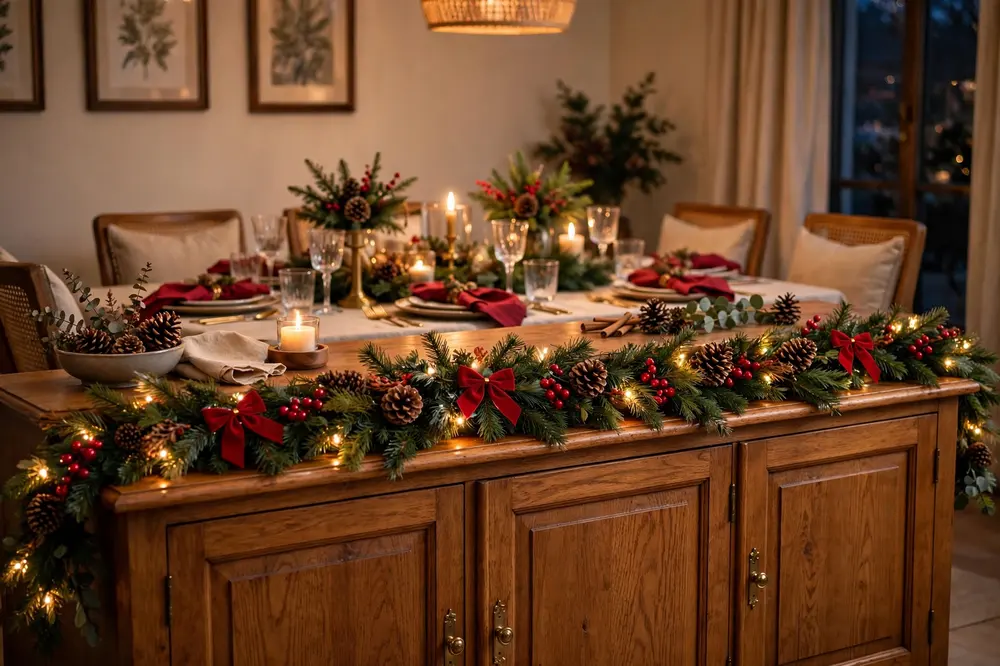
5. Best Premium Garland — Afloral Real Touch Deluxe Norfolk Pine Garland 96″
An 8-foot (96″) Norfolk pine garland about 16 inches wide. Afloral says it has double the fullness of its original 60-inch version. The branches are wired, hand-assembled and unlit.
This is the pick when the garland is the centrepiece of the mantel. It is made for indoor or sheltered outdoor use and is not fire retardant, so keep it away from candles and an open fireplace.
✓ Pros
- Very full 16″ width
- Wired branches hold their shape
- 96″ covers a standard mantel with some drape
✗ Cons
- Premium price compared with the others here
- Not fire retardant, so keep it away from open flames
These are the greenery pieces from PaxmaHub’s Winter Wreaths & Garlands picks — wreaths and unlit garlands to pair with the tree look in this guide. Ornaments and velvet bows themselves are not in this list yet; their own verified picks will be added when their ASINs and live prices are confirmed.
Frequently asked questions
What colours go with a jewel-tone Christmas tree?
Emerald and burgundy with antique gold is the safest lead combo. Add only one metallic, and keep the total to two or three jewel tones.
How do I keep a jewel-tone tree from looking dark?
Use warm white lights, add antique or champagne gold, and lift the look with a few cream ornaments. Keep the room’s other colours light so the tree is the dark point, not the whole room.
Can I use jewel tones on a small tree?
Yes, but scale down: fewer, smaller ornaments, one ribbon width, and the same 2-3 colour rule. On a small tree every extra colour shows more, not less.
Do jewel-tone ornaments have to be glass?
No. Shatterproof ornaments in emerald, burgundy and gold give the same colour and shine without breakage, which matters in homes with kids and pets.
What ribbon works best with jewel tones?
Velvet ribbon, loosely draped. It softens deep colours and carries the palette to the wreath and garland without adding a new colour.
What is trending for Christmas 2026?
Jewel tones with velvet textures are the season’s lead look: deep emerald, burgundy and plum instead of bright red and green, finished with oversized velvet bows and warm-white lights. The pattern across 2026 trends is fewer colours, richer textures.
What is the best ribbon to use for a Christmas tree?
Wired ribbon, about 2.5 inches wide — the wire is what lets loops and bows hold their shape all season. For a jewel-tone tree, velvet ribbon in one of the palette colours is the best choice; unwired ribbon and narrow ribbon both disappear into the branches.
More Christmas Guides

Era-by-era ideas and the best vintage-look picks for 2026.

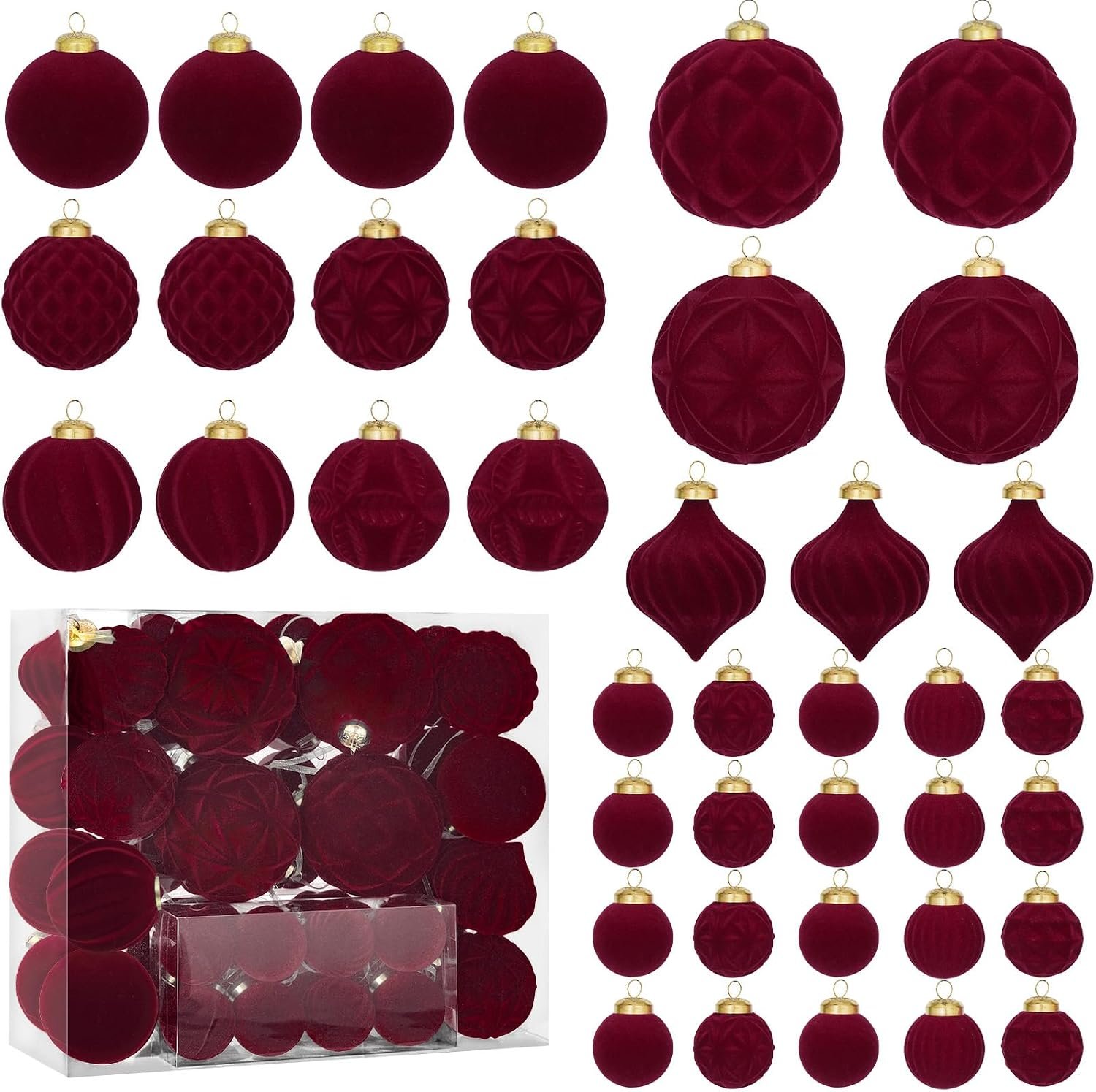
Burgundy Velvet Christmas Ornaments
The burgundy layer of the jewel-tone palette, compared in depth.
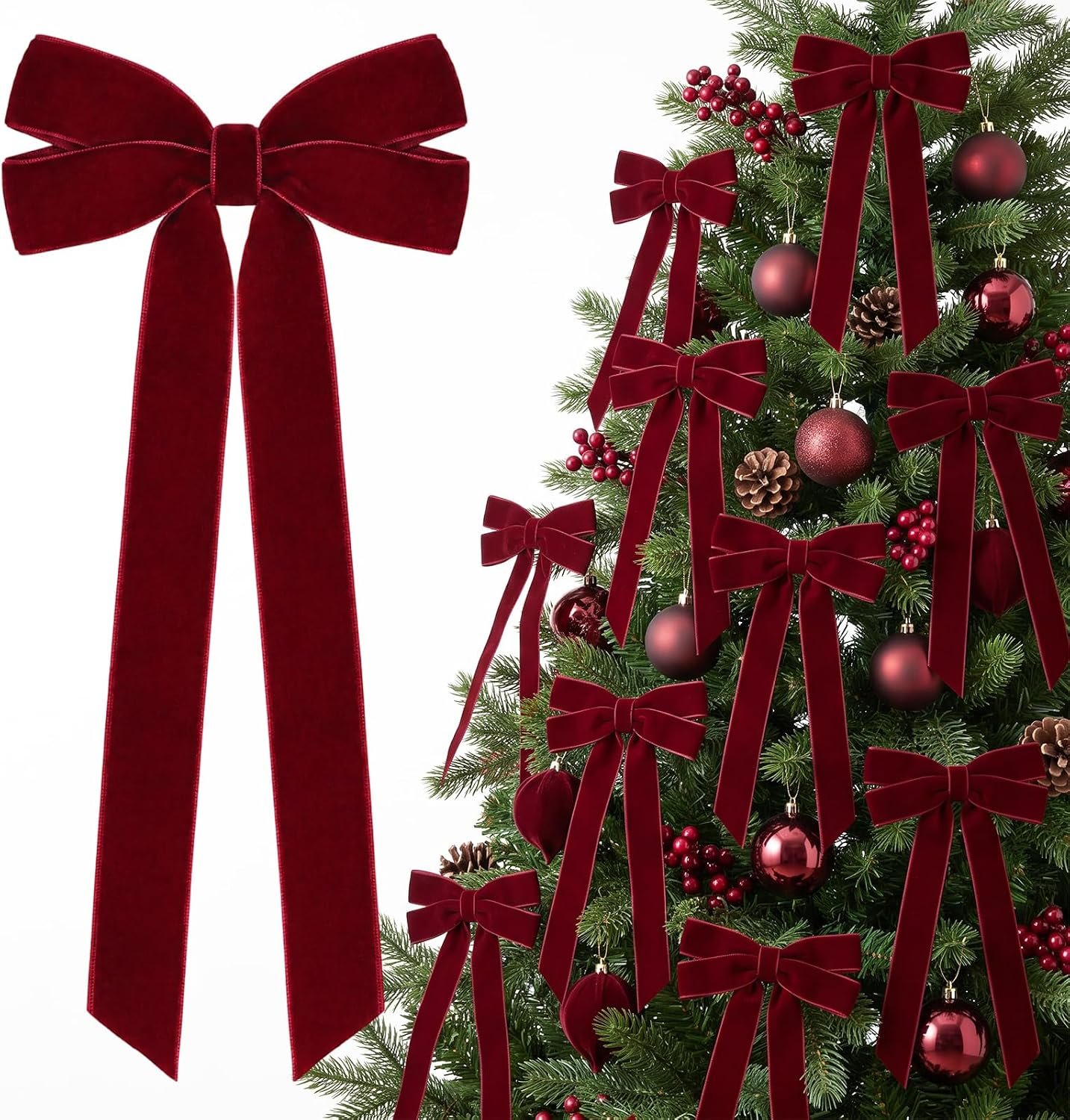
Velvet Bows for Christmas Tree
The oversized velvet bows that finish the jewel-tone look.
The heritage formula — burgundy, navy and tartan, layer by layer.