
As an Amazon Associate, we earn from qualifying purchases. This article may contain affiliate links — if you buy through them, we may earn a small commission at no extra cost to you. Prices change often — check the current price on Amazon.
Illustrations: AI-generated images are used in this guide.
Last updated: 3 November 2026
In this guide — 15 sections
- Short Answer
- Why the Ceramic Christmas Tree Came Back
- Size Guide: Which Ceramic Christmas Tree Fits Your Space?
- The 12 Best Ceramic Christmas Trees, Compared
- Classic 15-Inch Green Trees
- Sets of Three
- Bigger Statement Trees (18–24 Inches)
- White, Ivory and Flocked Finishes
- Budget, Mini and Character Trees
- Vintage Ceramic Christmas Trees: Real vs Vintage-Style, and What Old Ones Are Worth
- Replacement Bulbs & Parts: Keeping a Ceramic Tree Glowing
- Paint Your Own: Unpainted Ceramic Christmas Trees & Kits
- How to Store & Care for a Ceramic Christmas Tree
- Frequently Asked Questions
- The Bottom Line
Short Answer
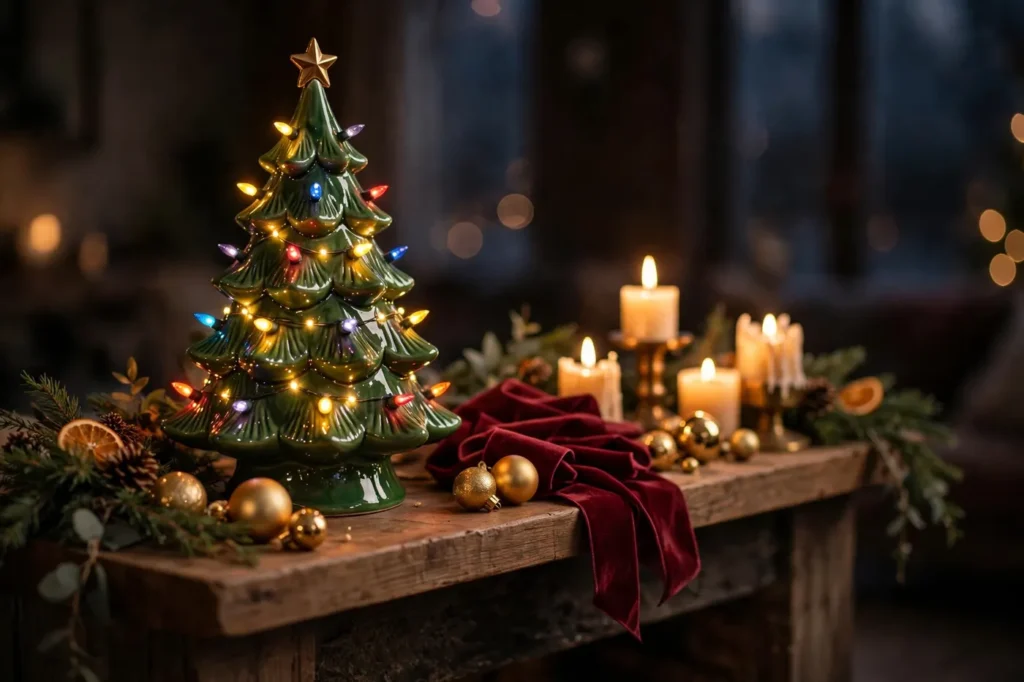
A ceramic Christmas tree is a small tabletop tree — usually 7 to 24 inches tall — made of molded ceramic with tiny colored plastic bulbs that glow from a single light in its base. First popular in the 1960s and 70s, they are back in style as ready-made vintage-style decor: no watering, no shedding, and nothing to assemble. The best-selling size is 15 inches. Our top pick after comparing the current range is the Best Choice Products 15-inch Ceramic Christmas Tree: pre-lit with multicolor bulbs and a star topper, it is the closest match to the classic look at a fair price. On a budget, the JOIEDOMI 15-inch Vintage Ceramic Tree covers the same look for less; for a premium heirloom feel, Lenox’s ivory ceramic tree is the standout. For three rooms in one buy, the Best Choice Products Set of 3 is the strongest seller among the sets. Genuine 1960s–70s originals are not sold new — everything new today is vintage-style — and unpainted ceramic trees and paint-your-own kits are widely available if you want to finish one yourself.
Top 3 Quick Picks
- Best Overall: Best Choice Products 15-Inch — the closest match to the classic studio look (Pick 1) Check price
- Best Budget: JOIEDOMI 15-Inch Vintage — the full classic size at a budget price (Pick 10) Check price
- Best Seller: Best Choice Products Set of 3 — three trees, three rooms, one buy (Pick 3) Check price
How we chose these picks
We compared the ceramic Christmas trees currently sold on Amazon by size, finish, lighting (plug-in or battery), price tier and the most common buyer complaints for each. We did not physically test these trees: notes on finish and glow come from product listings, photos and buyer reviews. The vintage section is based on completed-sale listings and collector guides.
Why the Ceramic Christmas Tree Came Back
Ask Google why ceramic Christmas trees are popular and you get the same answer households give: they are the Christmas decoration our grandparents had, shrunk to fit a mantel. The originals spread through ceramic studios in the 1960s and 70s, when people painted their own trees from studio molds as a social craft. The new ones keep everything people loved — the glossy green glaze, the jewel-coloured bulbs, the warm glow from one bulb in the base — and remove the only hard part, which was making one.
The demand is real and measurable, not just nostalgia talk. The leading trees are among the strongest Christmas sellers each season, replacement bulbs are a busy category of their own, and more people every year search how to make one. One honest note before the picks: today’s trees are vintage-style reproductions. That is a good thing for most buyers — they cost a fraction of collector prices, and if one breaks you can replace it. The vintage section below covers the real vintage market, what originals are worth, and how to tell them apart.

Size Guide: Which Ceramic Christmas Tree Fits Your Space?
Ceramic trees are sold by height, and height decides where the tree can live. Buy by the surface, not by the photo — every listing photo makes a 7-inch tree look like a centrepiece. Planning a bolder colour scheme around it? Our purple Christmas tree guide covers that route.
- Mini (7–11 inches) — desks, shelves, kids’ rooms, a bathroom counter. Battery or small plug-in models; the glow is the point, not the presence. The lowest prices in the category.
- Classic (15 inches) — the original tabletop size and the best seller. Big enough for a mantel or side table to read as “the tree”, small enough to store in a shoebox. Most choice and best value live here, from budget to mid-range prices.
- Large (18 inches) — entryway consoles and hearths where a 15-inch looks lost. Fewer models, and a clear step up in price.
- XL (24 inches) — a genuine statement piece, close to the biggest studio originals. The priciest tier; check your storage space before buying, because these do not fit in a shoebox.
- Sets of 3 — one purchase, three heights: the mantel-cluster look stylists use, and usually the cheapest way to cover several rooms.
Two fit checks before you buy anything on this page: measure the surface depth (a 15-inch tree’s base is roughly 5 inches across), and check whether the model is plug-in or battery — battery trees can go anywhere but dim sooner; plug-in trees glow all evening at full strength.
The 12 Best Ceramic Christmas Trees, Compared
| Pick | Best for | Check Price |
|---|---|---|
| Best Choice Products 15in | 15in · classic mantel look | Check Price |
| Casafield 15in Green | 15in · red-and-green rooms | Check Price |
| Best Choice Products Set of 3 | 3 sizes · three rooms at once | Check Price |
| Velvet-Finish Set of 3 | 3 sizes · jewel-tone rooms | Check Price |
| Best Choice Products 18in | 18in · consoles and hearths | Check Price |
| Best Choice Products 24in XL | 24in · one statement surface | Check Price |
| Lenox Ivory Light-Up | Tabletop · heirloom gift | Check Price |
| Casafield 15in White | 15in · white and silver schemes | Check Price |
| Casafield 15in Snow Flocked | 15in · winter-woodland look | Check Price |
| JOIEDOMI 15in Vintage | 15in · budget classic | Check Price |
| Joiedomi 7in Mini | 7in · desks and shelves | Check Price |
| FUNPENY 11in Snowman | 11in · kids and entryways | Check Price |
Classic 15-Inch Green Trees
The size and look most people picture: glossy green glaze, multicolor bulbs and a star on top. These two are the closest new matches to the studio originals.

1. Best Overall — Best Choice Products 15-Inch Ceramic Christmas Tree
This is the tree the whole category is measured against: a glossy green 15-inch tree, pre-lit with multicolor bulbs and a star topper, and among the strongest sellers in the category this season. It looks the most like the studio originals — full branches, warm glow, no assembly beyond plugging it in — and it sits in the middle of the price range rather than at the top.
The honest weakness is the same one every pre-lit ceramic tree shares: the bulbs are fixed decoration, so if your taste runs to an all-white or single-colour glow, this is not your tree (pick 8 is). The cord is also on the shorter side, so plan for it to live near an outlet.
Best for: The classic green, multicolor look on a mantel or side table · Skip if: You want a single-colour or all-white glow
Pros
- Closest look to the studio originals
- Classic look, zero assembly
- Mid-range price
Cons
- Fixed multicolor bulbs
- Shorter cord needs a nearby outlet
Check Price on AmazonOpens on Amazon

2. Best Classic Alternative — Casafield 15-Inch Green Ceramic Tree
Casafield’s 15-inch green tree is the closest rival to the leader: same size, same price. The glaze is a deeper green in the product photos, which suits traditional red-and-green rooms, and the bulb spacing is even, so the glow looks balanced from across the room.
You give up a little of the leader’s track record, and the price never seems to drop, so there is no sale worth waiting for.
Best for: Traditional red-and-green rooms · Skip if: You are waiting for a sale
Pros
- Deep classic green
- Even bulb spacing
- Same price as the leader
Cons
- Shorter track record than pick 1
- Price rarely discounted
Check Price on AmazonOpens on Amazon
Sets of Three
Three graduated trees in one box, for a mantel cluster or one tree per room. They cost barely more than a single classic tree.
3. Best Set — Best Choice Products Set of 3 Ceramic Trees
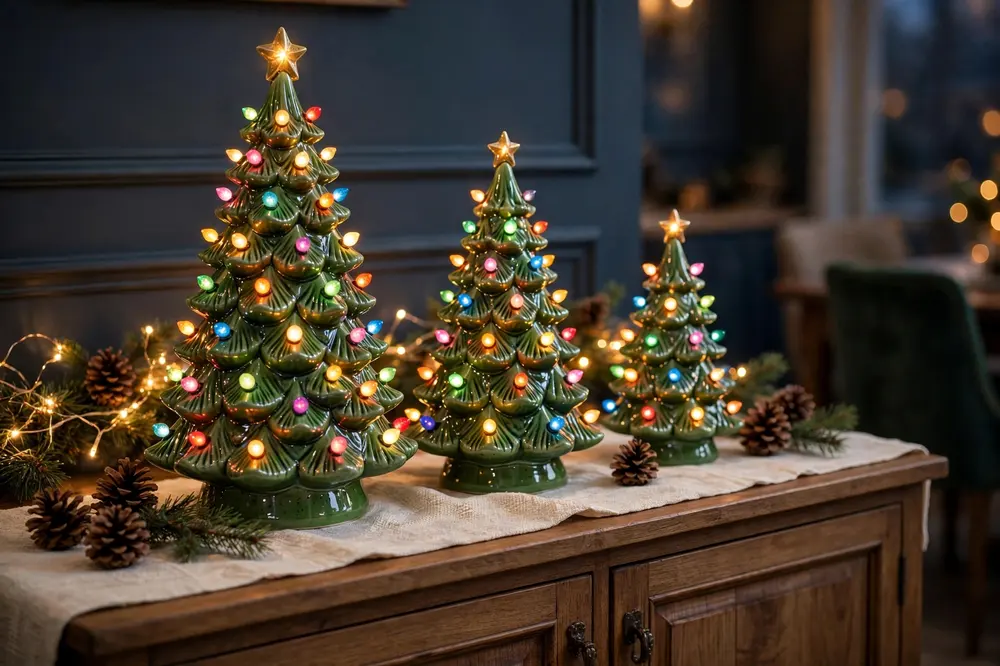
Three trees in graduated sizes for only a few dollars more than the single 15-inch, and the strongest seller among the sets. This is the mantel-cluster shortcut: group all three on a mantel or split them between the entryway, kitchen and a bedroom, and three rooms are decorated in five minutes.
The trade-off shows in buyer feedback: the common complaint is about the smallest tree’s glow being dimmer than its bigger siblings, which matters if you want a perfectly matched trio and matters much less if the three will live in different rooms.
Best for: Decorating three rooms or a mantel cluster at once · Skip if: You need a perfectly matched trio
Pros
- Three rooms covered in one buy
- Barely more than one single tree
- Instant styled cluster
Cons
- Smallest tree glows dimmer
- Less presence per tree than one classic 15in
Check Price on AmazonOpens on Amazon

4. Best for Jewel-Tone Rooms — Velvet-Finish Ceramic Tree Set of 3
The crossover pick for our readers: a set of three ceramic trees with a velvet finish, the lowest-priced set in this guide and one of the best-reviewed. The matte velvet surface drinks in light instead of reflecting it, which is exactly why it sits so well next to the burgundy and jewel-tone decorations in our Christmas guides — if your tree wears velvet ornaments, these belong on the mantel beside it. Under the main tree, a burgundy velvet tree skirt finishes the same scheme.
Velvet finish is a surface you maintain, not just admire: it shows dust sooner than gloss and wants a soft brush rather than a damp cloth. And as a set of smaller trees, it is a styling piece, not a main-tabletop-tree replacement.
Best for: Burgundy and jewel-tone schemes · Skip if: You want a main tree or a low-maintenance finish
Pros
- Among the best-reviewed picks here
- Made for burgundy/jewel-tone schemes
- Cheapest set here
Cons
- Velvet shows dust, brush-clean only
- Smaller sizes — accent, not centrepiece
Check Price on AmazonOpens on Amazon
Bigger Statement Trees (18–24 Inches)
For consoles, hearths and wide sideboards where a 15-inch tree looks lost. Measure your surface before you buy; these need depth as well as width.

5. Best Large — Best Choice Products 18-Inch Ceramic Tree
When a 15-inch tree looks lost on your console or hearth, this is the step up: 18 inches, from the same range as pick 1. The extra three inches change the presence completely — this reads as a decoration you plan a surface around, not a filler — and the build quality tracks the brand’s smaller leader.
The jump in price is real: you pay noticeably more for three inches and a stronger silhouette. Measure first. On a narrow mantel the 15-inch is honestly the better fit, and the money saved covers a spare bulb pack (see Replacement Bulbs & Parts) with change left over.
Best for: Consoles and hearths where 15 inches looks lost · Skip if: Your mantel is narrow
Pros
- Genuine presence at 18in
- Stronger silhouette than 15in
- Same trusted range as the leader
Cons
- A real price step up from 15in
- Too big for narrow mantels
Check Price on AmazonOpens on Amazon

6. Best XL Statement — Best Choice Products 24-Inch Ceramic Tree
The biggest modern ceramic tree in the roundup: 24 inches and the priciest pick here — people buy this size deliberately, as the closest new equivalent of the largest studio-era trees. If you have one surface in the house that carries Christmas — a wide hearth, a deep entryway console — this is the tree that can carry it alone. (Casafield’s 24-inch green tree is the alternative to compare before you decide.)
Statement size cuts both ways: it is the heaviest tree here, the hardest to store safely (read the storage section before it goes back in a cupboard), and at this price a chip hurts. Buy it for a permanent spot, not as a spare.
Best for: One wide surface that carries Christmas alone · Skip if: Storage space is tight
Pros
- Biggest new ceramic tree available
- Same range as pick 1
- Carries a whole surface alone
Cons
- Priciest pick here
- Heavy, storage needs planning
Check Price on AmazonOpens on Amazon
White, Ivory and Flocked Finishes
The same classic shape for white, silver and winter-woodland schemes. Lighter finishes show dust sooner, so they suit rooms you keep tidy.

7. Best Premium — Lenox Ivory Light-Up Ceramic Tree
Lenox does this tree the way Lenox does everything: ivory porcelain instead of green glaze, and a sculpted finish, at a premium price. It is the one pick here that reads as an heirloom gift rather than a decoration you picked up for yourself — the tree you give your mother so that in thirty years someone is writing a guide about hers.
Premium means porcelain-fragile and priced like it. It is also a softer, whiter glow than the classic green trees, so if it is the nostalgic green look you are chasing, buy pick 1 and put the change toward bulbs.
Best for: An heirloom gift or white and silver schemes · Skip if: You want the nostalgic green look
Pros
- Heirloom finish and giftable brand
- Sculpted porcelain detail
- Ivory suits white/silver schemes
Cons
- Premium price
- Porcelain-fragile — keep away from toddler-height edges
Check Price on AmazonOpens on Amazon
8. Best White — Casafield 15-Inch White Ceramic Tree
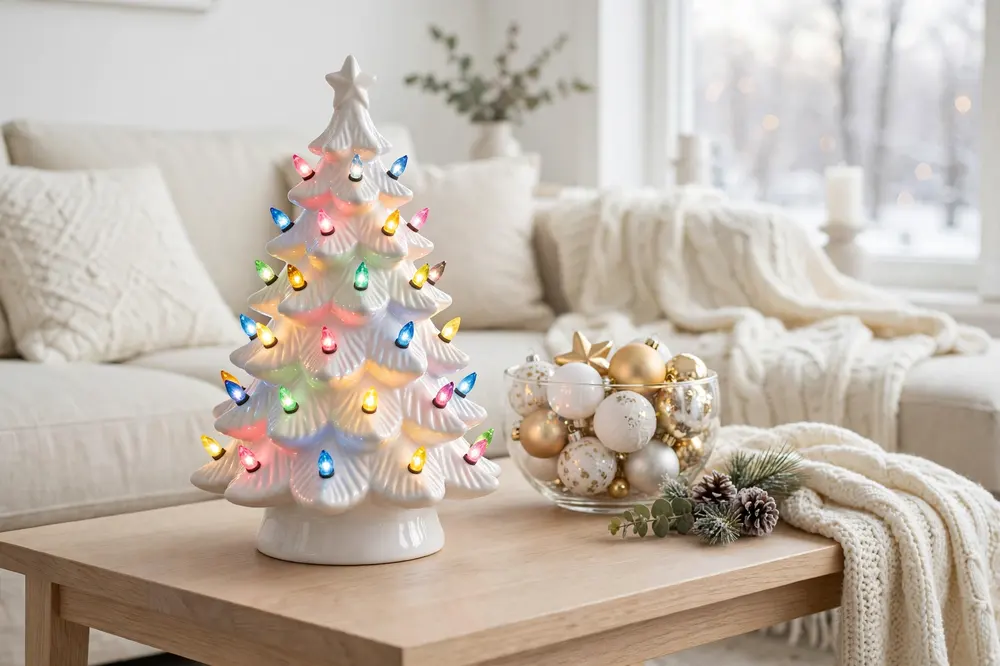
White ceramic Christmas trees are a popular search of their own, and Casafield’s white 15-inch is the clean answer: at the same price as the green classics. The white glaze with coloured bulbs is the snowy retro look; with a winter-white or silver scheme it is the most elegant tree in this guide, and it is the one that photographs best for a Christmas card shelf.
White shows everything — dust, a scuff from storage, a bulb that sits crooked. It wants the careful storage in the care section below more than any green tree here.
Best for: Winter-white and silver schemes · Skip if: Dust and scuffs will bother you
Pros
- The white retro look, done cleanly
- Same trusted 15in platform
- Elegant with silver/white schemes
Cons
- Shows dust and scuffs
- Coloured bulbs fixed
Check Price on AmazonOpens on Amazon
9. Best Snowy Look — Casafield 15-Inch Snow Flocked Ceramic Tree
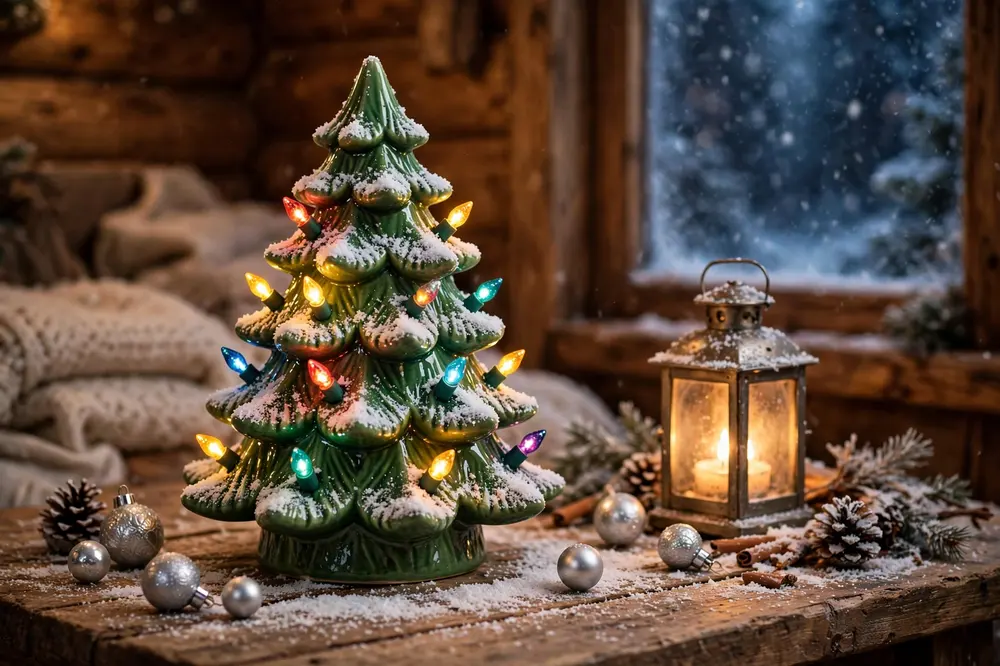
Same Casafield 15-inch platform with a snow-flocked finish: at the same price as the plain green. The flocking softens the green and makes the bulb glow look like light through snow — the coziest read of any tree here, and the natural partner for flocked garlands and a winter-woodland scheme.
Flocking sheds a little, especially in its first season out of the box. Give it a gentle shake outdoors before it goes on the mantel and expect a light dusting underneath for the first week.
Best for: Winter-woodland and flocked-garland schemes · Skip if: You don’t want any shedding
Pros
- Coziest glow in the guide
- Flocked finish suits woodland schemes
- Same price as the plain green
Cons
- Flocking sheds at first
- White dusting under the tree early on
Check Price on AmazonOpens on Amazon
Budget, Mini and Character Trees
The cheapest way into the look, plus the small and playful trees for desks, kids’ rooms and entryways.

10. Best Budget — JOIEDOMI 15-Inch Vintage Ceramic Tree
The full classic size at a budget price, well under the leader. If you want the 15-inch look in a second room, or you are buying your first ceramic tree and are not yet sure the style is for you, this is the sensible way in.
The savings show in the finish: going by listing photos and buyer feedback, the glaze and bulb alignment are a notch below picks 1 and 2 up close. From across the room, glowing, most guests will never see the difference — which is rather the point of a budget pick.
Best for: A first ceramic tree or a second room · Skip if: You will see it up close every day
Pros
- Classic 15in size at a budget price
- Solid buyer track record
- Ideal first or second-room tree
Cons
- Finish a notch below picks 1–2 up close
Check Price on AmazonOpens on Amazon

11. Best Mini — Joiedomi 7-Inch Ceramic Tree
Seven inches at the lowest price in this guide: the desk-and-shelf tree. This is the one for a workspace, a child’s nightstand (the glow is gentle), or a kitchen counter corner — anywhere a full tabletop tree would be in the way. At this price it is also the stocking-stuffer version of the whole trend.
Small is small: from more than a few feet away it is a glow, not a tree. Buy it as an accent light with a Christmas shape, and it will delight you; buy it as a room’s main decoration and it will not.
Best for: Desks, nightstands and counter corners · Skip if: You want room presence
Pros
- Cheapest way into the trend
- Gentle night-light glow
- Goes anywhere
Cons
- Accent only — no room presence
- Tiny bulbs are fiddly to reseat
Check Price on AmazonOpens on Amazon

12. Best Novelty — FUNPENY 11-Inch Vintage Snowman Ceramic Tree
The character pick: an 11-inch vintage-style tree finished with a snowman, at a budget price — and it outsells several plainer trees in this guide, which tells you exactly what it is for. Kids claim this one, and entryways get comments about it.
Novelty dates a decoration faster than any classic shape. Buy it because someone in your house will love it specifically, not as your only ceramic tree.
Best for: Kids’ rooms and entryways · Skip if: It would be your only ceramic tree
Pros
- The crowd-pleaser
- Kids’ favourite
- Budget price
Cons
- Novelty look dates fastest
- 11in is accent size
Check Price on AmazonOpens on Amazon
Vintage Ceramic Christmas Trees: Real vs Vintage-Style, and What Old Ones Are Worth
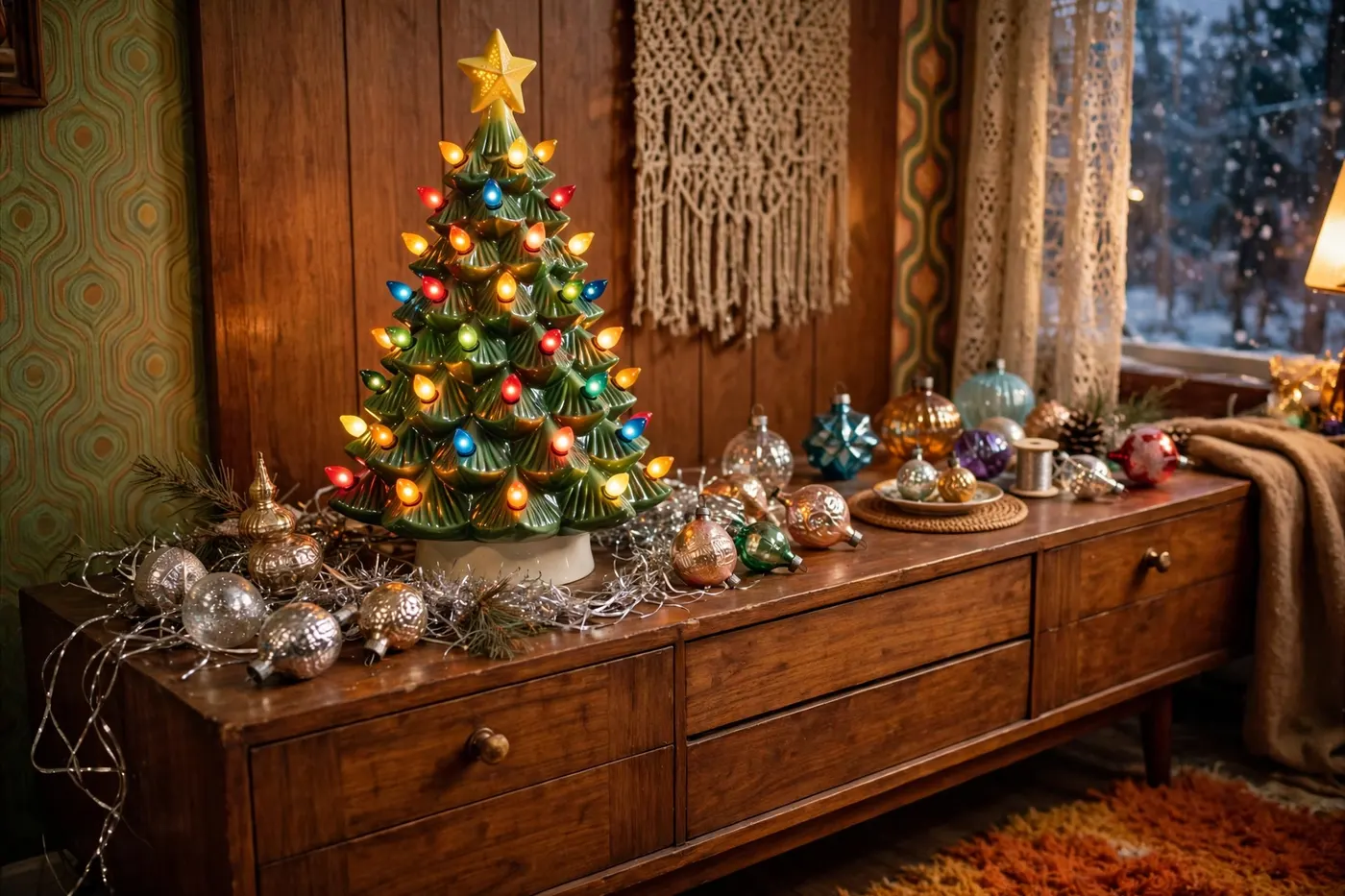
This is the section most guides skip, and it is the one searchers keep asking Google about — are ceramic Christmas trees worth money, how much are vintage ones worth, and how do you know if yours is vintage at all?
Are they still made? Yes — every pick above is a current, new tree. But understand what “vintage” means in the listings: the modern category is vintage-style. When Amazon’s vintage search results came back for this guide, they were modern reproductions almost without exception. Genuine 1960s–70s originals trade on eBay, in antique shops and at estate sales — not in new-product listings.
When were they popular? The original wave ran through the 1960s and peaked in the 1970s, when ceramic studios sold or rented molds (Atlantic Mold’s trees are the famous ones) and painting a tree was a social craft. Those studio trees were hand-painted, so no two are exactly alike — one reason originals hold value.
How to tell if one is vintage: look at the base and the making, not the style. Hand-painted detail and slight irregularities point to a studio piece; a maker’s or mold mark and a date on the underside are the strongest signs; older trees often have a separate two-piece build (tree plus lighted base) and wear consistent with age. A crisp, perfectly uniform finish with modern packaging is a reproduction — enjoy it as one.
What are old ones worth, and why so expensive? Common studio trees in good condition typically sell for modest money — think tens of dollars, not hundreds — while large, well-painted, marked examples and rare colours go higher. Prices ask more than prices get: listings sit, sold prices tell the truth, so judge any tree by completed sales of the same size and maker, never by the highest asking price you can find. The expense, when it is real, comes from scarcity plus handwork — the studios closed, the molds scattered, and nobody is making more 1974 originals.
Are they back in style? Yes — with a decade of stable, heavy seasonal demand behind the comeback rather than one viral season. If you own an original, the kindest thing you can do for its value is keep its original bulbs and base with it, and store it the way the care section below describes.
Going for the full vintage look? Our vintage Christmas decorations guide walks through every era, decade by decade — and shows where a ceramic tree fits into each one.
Replacement Bulbs & Parts: Keeping a Ceramic Tree Glowing
The part of this hobby nobody mentions until December 26th: the little plastic bulbs get lost, fade and snap, and a tree missing six bulbs looks sad. Spare bulbs and cords are among the steadiest sellers in this whole category, so buy a spare pack with your tree, not after the first casualty.
Which bulbs fit? Twist-in replacement bulbs come in two stem sizes: small (1/8-inch stem), for trees about 8 inches and under, and medium (3/16-inch stem), for most classic 15-inch and larger trees. Match your tree’s size to the stem, and buy the multi-colour pack unless your tree is a single-colour design. Star toppers and the base light cord are the other two parts worth having a spare of — the cord is the single point of failure for the whole tree’s glow.
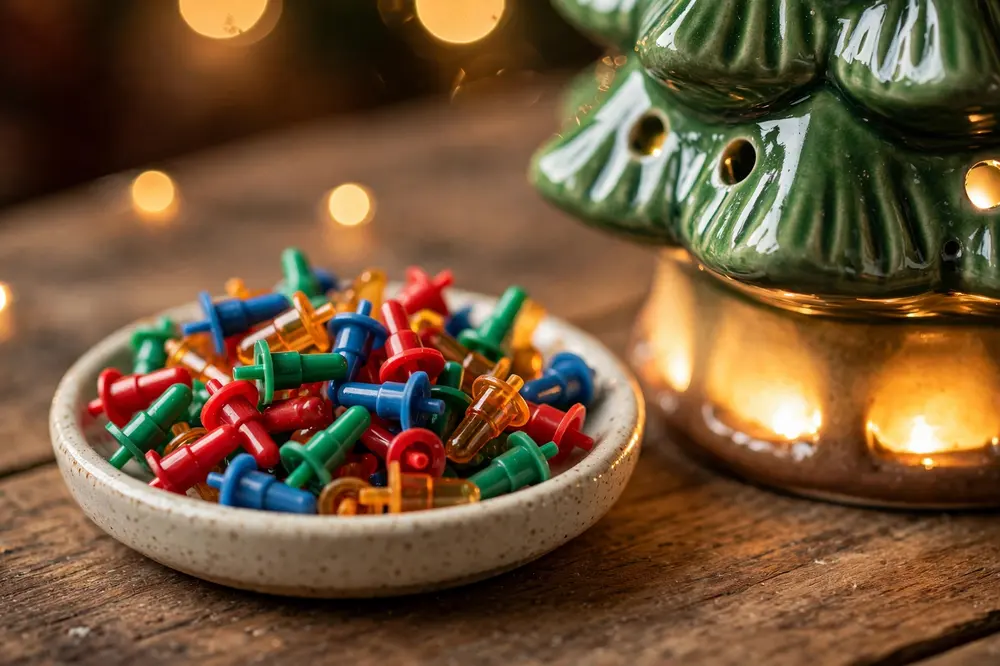
Creative Hobbies Small Twist Bulbs — the small-stem pack for mini trees.
Check Price on AmazonOpens on Amazon

Replacement Twist Bulbs for Ceramic Trees — the all-round spare pack for classic sizes.
Check Price on AmazonOpens on Amazon
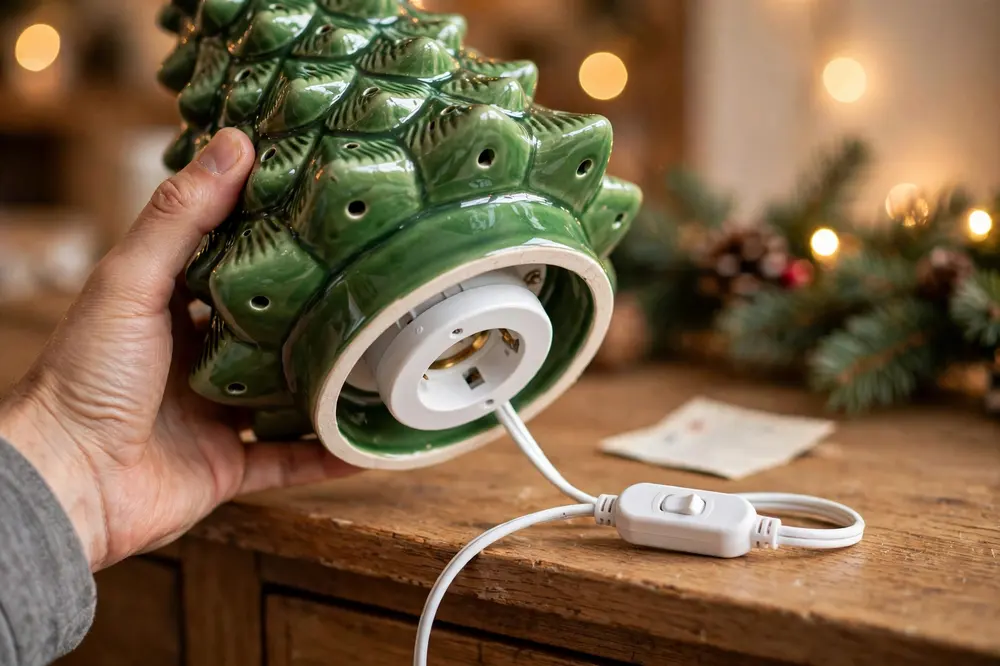
Brightown Replacement Light Cord — the spare that saves Christmas Eve.
Check Price on AmazonOpens on Amazon
Paint Your Own: Unpainted Ceramic Christmas Trees & Kits
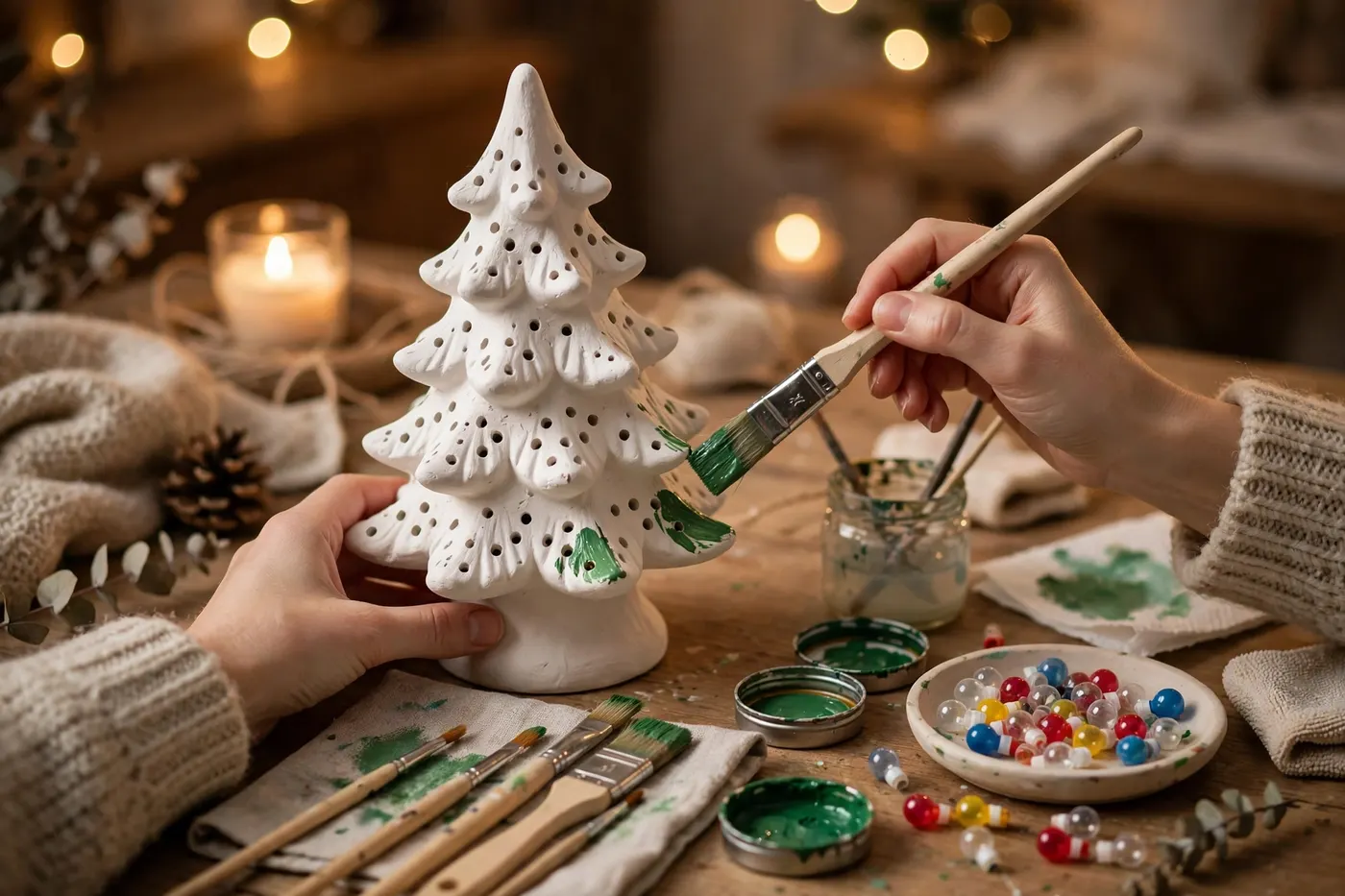
The fastest-growing corner of this topic — more people every year search how to make a ceramic Christmas tree, and painting one is how the originals were made in the first place. You buy the fired ceramic (called bisque) tree unpainted, paint it with acrylics, and fit the bulbs and base light.

Creative Hobbies Ready-to-Paint Bisque Tree, 6.75in Light-Up Kit — the complete starter: tree, and the light-up format the finished piece needs. Small at 6.75 inches, which makes it a forgiving first project and a good craft-night tree for kids.
Check Price on AmazonOpens on Amazon

DIY Bisque Ceramic Tree Ornaments — the ornament-scale version: paint a batch as gifts or as a set for the big tree.
Check Price on AmazonOpens on Amazon
Three honest tips from how these projects actually go: acrylic paint needs no kiln (that is the whole appeal of bisque craft kits), two thin coats beat one thick one on the glossy look, and paint the tree before fitting bulbs — every painter who does it the other way round does it once. If you would rather start bigger, unpainted full-size bisque trees are sold by ceramic suppliers (the paint-your-own studios in the search results), and the process is identical, just longer.
How to Store & Care for a Ceramic Christmas Tree
Ceramic survives decades or one bad January, and the difference is storage. The method: unplug and let the tree cool; remove the star topper and store it separately wrapped; if your bulbs are removable, leave them in (pushing and pulling is how stems snap) but pad the tree so nothing presses on them; wrap the tree in a soft cloth or bubble wrap, place it upright in a firm box with the base light cord coiled beside it — never on top — and store it somewhere dry at room temperature. Attics with summer heat swings are where glazes craze. Dust with a soft dry brush during the season; a damp cloth is fine on gloss glaze, but keep water away from flocked and velvet finishes (picks 4 and 9), which are brush-only.
Frequently Asked Questions
Do they still make ceramic Christmas trees?
Yes. Every major Christmas brand sells them today, and the leading models are among the season’s strongest sellers. What is no longer made is the hand-painted studio original of the 1960s–70s — today’s trees are vintage-style reproductions of those, which is why they cost a fraction of collector prices.
What is the best ceramic Christmas tree?
For most people, the Best Choice Products 15-inch — it is the closest to the classic studio look at a mid-range price. The JOIEDOMI 15-inch is the budget version of the same idea, and the Lenox ivory tree is the premium pick.
Are ceramic Christmas trees back in style?
Yes. They have held heavy seasonal demand for several years running, with a stable November–December peak rather than a one-season spike — and the fastest-growing part of the topic is paint-your-own kits and replacement parts, which is what a settled hobby looks like.
How do I know if my ceramic Christmas tree is vintage?
Check the making, not the look: hand-painted detail, mold or maker marks and sometimes a date on the underside, a two-piece tree-and-base build, and wear that matches its age. A perfectly uniform finish in modern packaging is a reproduction.
How much are vintage ceramic Christmas trees worth?
Common studio trees in good condition usually sell for tens of dollars; large, marked, well-painted or rare-colour examples sell for more. Judge by completed sales for the same size and maker — asking prices are not values.
Why are vintage ceramic Christmas trees so expensive?
Scarcity plus handwork. The studios closed and the molds scattered, each original was painted by hand, and good survivors get rarer every year. That said, plenty of listings are simply optimistic — sold prices are the honest guide.
What size bulb goes in a ceramic Christmas tree?
Twist bulbs come in two stem sizes: small (1/8 inch) for trees about 8 inches and under, and medium (3/16 inch) for most classic 15-inch and larger trees. Match the stem to your tree’s size, and keep a spare pack — spare bulbs are a steady seller because everybody needs them eventually.
How do I store my ceramic Christmas tree?
Wrap it in a soft cloth or bubble wrap, store the topper separately, keep the bulbs in place and padded, and stand it upright in a firm box in a dry, room-temperature place. Heat-swing attics craze the glaze; pressure on the bulbs snaps stems.
How do I make my own ceramic Christmas tree?
Buy an unpainted (bisque) tree or a paint-your-own kit, paint it with acrylics in two thin coats, let it dry fully, then fit the plastic bulbs and the base light. No kiln is needed with craft acrylics, and a 6.75-inch kit is the forgiving place to start.
The Bottom Line
The ceramic Christmas tree earned its comeback: it is the rare trend that is also a genuinely good product — instant, storable, repairable and warm to look at. Buy the size that fits your surface (15 inches is the classic for a reason), keep a spare bulb pack in the drawer, and if the making of things is half your Christmas anyway, paint your own — it is how the originals started. And if there is a hand-painted one in your family’s attic, check its base before you assume it is a reproduction. It might be the real 1974 thing.
As an Amazon Associate, we earn from qualifying purchases. Prices and availability change — the price on Amazon at checkout is the one that counts.
More Christmas Guides
 Vintage Christmas DecorationsEra-by-era ideas and the best vintage-look picks for 2026.
 Burgundy Velvet Christmas OrnamentsThe 11 best velvet sets, bows and picks for a jewel-tone tree.
 Purple Christmas Tree GuideReal purple trees, the DIY route and honest decor ideas.
 Burgundy Velvet Tree SkirtNine plush skirts that finish a jewel-tone tree properly.